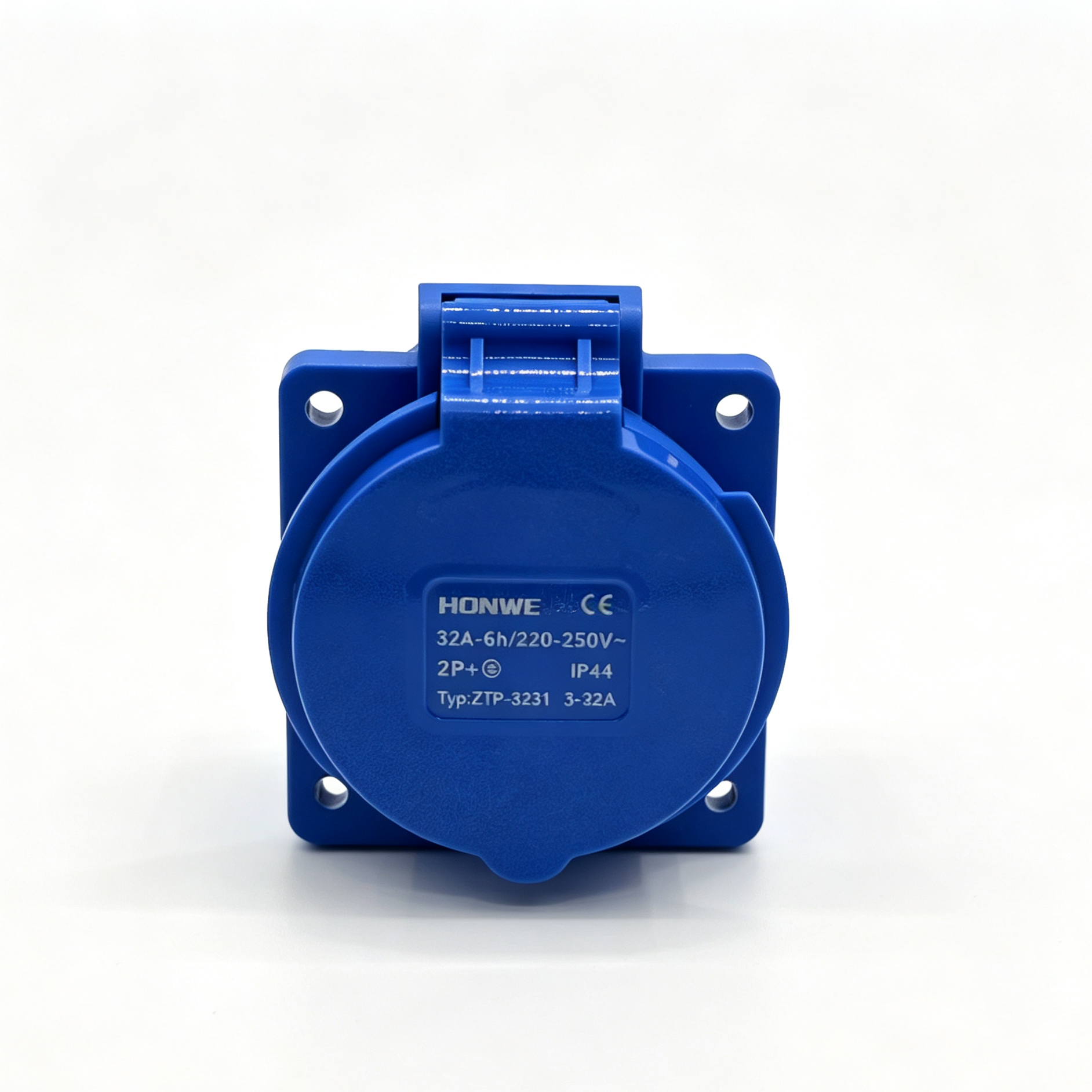
PP, PE, ABS, PC, and PA (nylon) are common injection molding materials with distinct strengths, heat resistance, chemical resistance, and costs. This article outlines their key advantages and applications in industrial products.
What injection molding materials are commonly used for industrial plugs and sockets? What are the differences between PP, PE, ABS, PC, and Nylon?
In the production of industrial plugs, sockets, connectors, and various plastic components, injection molding materials directly affect product strength, heat resistance, wear resistance, insulation performance, and service life.
Common injection molding materials include PP, PE, ABS, PC, and PA (nylon). Since each material has distinct properties, selection should be based on the product's operating environment and performance requirements.
1. What Are Injection Molding Raw Materials?
Injection molding material refers to plastic materials used in the injection molding process. Plastic pellets are heated and melted, then injected into a mold via an injection molding machine. After cooling, they form the desired product.
Common injection molding materials include:
PP: Polypropylene
PE: Polyethylene
ABS: Acrylonitrile Butadiene Styrene
PC: Polycarbonate
PA: Polyamide, also known as Nylon
Different materials have varying performance characteristics, so there is no single "best" injection molding material—only the one best suited for your specific product.
2. What is PP material?
PP (Polypropylene)A common commodity plastic with low density, good chemical resistance, excellent fatigue resistance, and ease of processing.
PP is cost-effective, making it widely used in household goods, automotive parts, packaging, and various industrial plastic components.
3. What material is PE?
PE (Polyethylene)A common general-purpose plastic with good chemical resistance, water resistance, and electrical insulation properties, along with a degree of flexibility.
PE is commonly used for packaging, containers, pipes, cables and wires, and other plastic products.
4. What is ABS material?
ABSA widely used engineering plastic with excellent mechanical strength, impact resistance, processability, and appearance.
ABS offers balanced overall performance, making it ideal for appliance housings, electronic device enclosures, tool casings, and industrial equipment shells.
5. What material is PC?
PC (Polycarbonate)is a common engineering plastic. Its key advantages include high impact strength, good heat resistance, and dimensional stability.
Therefore, PC is commonly used for electronic and electrical equipment, industrial products, and plastic enclosures requiring high mechanical strength.
For electrical products such as industrial plugs and sockets, PC is also a common housing material.
VI. What is PA (Nylon) material?
PA (polyamide) is commonly known as nylon.Common types include PA6, PA66, and glass fiber-reinforced nylon (PA+GF).
Compared to commodity plastics such as PP and PE, nylon stands out for:
High strength, wear resistance, fatigue resistance, heat resistance, and excellent electrical insulation properties.
Therefore, nylon is widely used in mechanical parts, electrical connectors, industrial equipment, and automotive components.
PA66 typically offers good strength and heat resistance; adding glass fiber further improves the material's strength, stiffness, and dimensional stability.
For industrial plugs, sockets, and connectors, nylon is used in structural components requiring high mechanical strength and durability.
Note that nylon is hygroscopic; select the specific grade and environment based on actual application requirements.
7. What are the differences between PP, PE, ABS, PC, and Nylon?
In short:
Material | Key Benefits | Common Applications |
|---|---|---|
PP | Lightweight, good chemical resistance, and low cost | General-purpose plastics and industrial plastic components |
PE | Chemical and water resistant with good flexibility | Packaging, Pipes, and Containers |
ABS | Balanced strength, processability, and appearance | Housings, Tools, Electronics |
PC | High impact strength and good heat resistance | Electrical products, industrial enclosures |
PA Nylon | High-strength, wear-resistant, fatigue-resistant, heat-resistant | Mechanical parts, electrical connectors, industrial products |
8. What is the cost difference between these materials?
With standard basic materials, costs can be roughly ranked as follows:
PP ≈ PE < ABS < PA6 ≈ PC < PA66
PP and PE are typically low-cost commodity plastics; ABS is generally slightly more expensive; PA6 and PC are higher-priced engineering plastics; while modified materials such as PA66, glass fiber-reinforced, or flame-retardant grades usually cost even more.
However, actual pricing may vary based on brand, material grade, flame retardant rating, fiberglass content, and market conditions.
Therefore, final costs cannot be determined solely by material types such as PP, ABS, PC, or PA.
IX. Why do industrial plugs and sockets use different plastic materials?
Industrial plugs and sockets must operate reliably across diverse environments, requiring different specifications for housing and structural materials.
For example:
For cost and lightweight requirements, consider materials like PP.
For good overall mechanical properties, consider ABS.
For high requirements on impact resistance and heat resistance, consider PC.
For high requirements on mechanical strength, wear resistance, and fatigue resistance, consider PA (Nylon).
If the product requires special properties such as flame retardancy, select the corresponding flame-retardant material grade.
Therefore, selecting materials for industrial plugs and sockets is not about simply choosing the "most expensive options," but rather based onProduct structure, operating environment, performance requirements, and costPerform a comprehensive selection.
Summary
PP, PE, ABS, PC, and PA (nylon) are common injection molding materials, each with distinct characteristics in strength, heat resistance, chemical resistance, wear resistance, and cost.
PP and PE prioritize cost and general performance; ABS offers balanced overall properties; PC provides high impact resistance and heat tolerance; PA (Nylon) excels in strength, wear resistance, and fatigue durability.
Wenzhou Keben Electrical Appliance FactoryWe offer industrial sockets in various specifications. The default raw material used is currentlyPA NylonMaterial; contact us for customization.