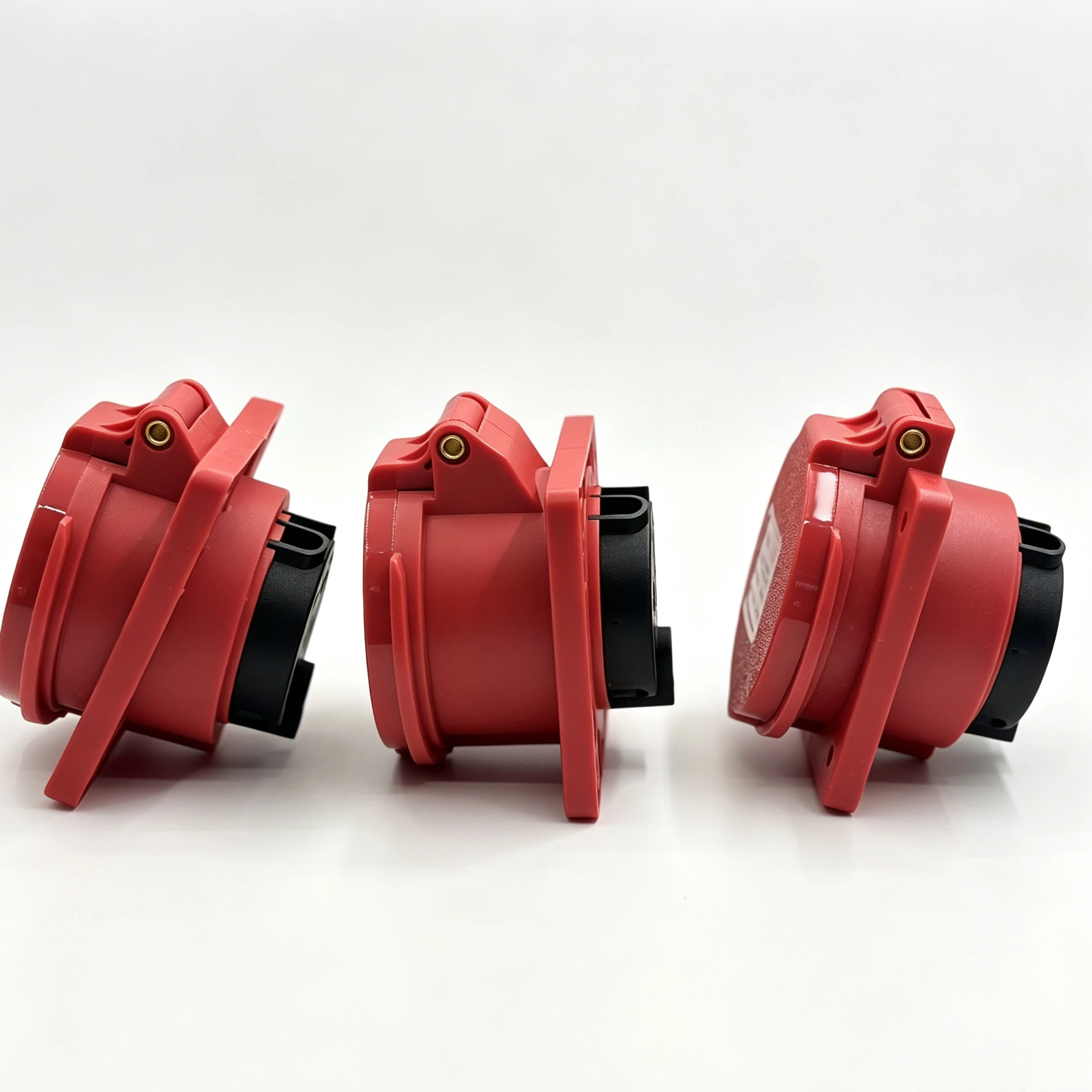
16A, 32A, and 63A are common rated current specifications for industrial sockets. The main differences lie in their current-carrying capacity and the equipment they support. 16A is suitable for low-current devices, 32A for common industrial machinery and construction equipment, and 63A for high-current large-scale industrial equipment.
What are the differences between 16A, 32A, and 63A industrial sockets? How do I choose the right one?
When selecting industrial sockets,16A、32A、63AThese are common rated current specifications. Many users wonder: What's the difference between a 16A industrial socket and a 32A industrial socket? Is a 63A industrial socket always better than a 32A one? How do you choose the right current rating for your industrial equipment?
In fact, the main difference between 16A, 32A, and 63A lies inDifferent rated currentsRated current determines which industrial sockets can be matched to equipment and electrical systems. However, when selecting a socket, you must also consider rated voltage, number of poles, protection rating, mounting method, and the actual power requirements of the equipment.
This article provides a detailed comparison of 6A, 2A, and 3A industrial sockets and explains how to select the appropriate rating based on your equipment needs.
1. What is the rated current of an industrial socket?
The "16A", "32A", and "63A" on the industrial socket refer to the product'sRated Current Level。
In simple terms, rated current indicates the designed current level for an industrial socket under specified conditions.
Therefore:
16A Industrial Socket: Rated current is 16A
32A Industrial Socket: Rated current is 32A
63A Industrial Socket: Rated current is 63A
Higher rated current typically indicates the product must handle greater current loads, necessitating differences in conductive components, contact structures, terminals, cable connections, and overall structural design.
However,A higher rated current does not necessarily mean an industrial socket is better.。
Select the appropriate specifications based on your device and power system requirements.
2. What is the difference between 16A, 32A, and 63A industrial sockets?
The three specifications differ most clearly in their rated current.
Compare Projects | 16A Industrial Socket | 32A Industrial Socket | 63A Industrial Socket |
|---|---|---|---|
Rated Current | 16A | 32A | 63A |
Applicable Load | Low-current devices | Medium-current equipment | High-current devices |
Product Dimensions | Usually smaller | Moderate | Usually larger |
Conductive components | Corresponds to 16A design | Corresponds to 32A design | Matches 63A Design |
Cable Specifications | Select based on system configuration | Select based on system configuration | Select based on system configuration |
Common Applications | Tools, small equipment, etc. | Machinery, construction equipment | Heavy Machinery and Industrial Equipment |
Please note that product dimensions, structure, and specific applications may vary by manufacturer. Therefore, performance cannot be determined based on current ratings alone.
3. What devices is the 16A industrial socket suitable for?
16A Industrial SocketA common specification for industrial power connections.
It is typically suitable for industrial equipment and power tools with rated operating currents within the corresponding range, such as:
Industrial Power Tools
Small Machinery
Construction Tools
Mobile Device
Small pump equipment
Partial lighting equipment
Temporary power distribution equipment
16A industrial sockets generally offer good versatility and are suitable for many small to medium-sized industrial equipment.
However, whether 1 6A industrial sockets can be used depends on the rated current and power supply requirements listed on the device nameplate.
4. What devices is the 3 2A industrial socket compatible with?
32A Industrial SocketSupports rated current higher than 1 6A, making it ideal for industrial equipment requiring higher current.
Common applications include:
Industrial Machinery
Construction Equipment
Welding Equipment
Heavy-duty Power Tools
Industrial Pumps
Compressor
Production Equipment
Temporary Industrial Power Distribution
In factories and construction sites, the 32A industrial socket is a common industrial power connection standard.
If the device's rated current exceeds the 16A range, select a 32A or higher-rated industrial socket based on actual electrical parameters.
5. Which devices are compatible with the 6 3A industrial socket?
63A Industrial SocketDesigned for industrial equipment and power distribution systems with higher current demands.
Common use cases include:
Large industrial machinery
Large electric motors and equipment
Heavy Construction Equipment
Industrial Power Distribution System
Large-scale welding equipment
Power generation equipment
High-power industrial equipment
Since 6 3A industrial sockets must meet higher current requirements, their product structure and conductive components are typically reinforced accordingly.
For large industrial equipment, select based on the rated current, starting current, and power supply system capacity.
6. What is the power rating for 1 6A, 3 2A, and 6 3A industrial sockets?
This is a very common question when selecting industrial power outlets.
Theoretically, electrical power can be estimated using the following formula:
Single-phase power:
P = U × I
where:
P = Power
U = Voltage
I = Current
For three-phase systems, the following is typically used:
P ≈ √3 × U × I × cosφ
where cosφ is the power factor.
For example, under assumed voltage, power factor, and operating conditions, 16A, 32A, and 63A may correspond to different theoretical power values.
However, please pay special attention to:
You cannot simply treat "16A × some voltage" as the actual continuous power rating for all industrial equipment.
Actual devices also need to consider:
Single-phase or three-phase power supply
Rated Voltage
Power Factor
Continuous work time
Inrush current
Cable Specifications
Circuit Breaker Specifications
Complete power distribution system design
Therefore, selection should be based on the equipment nameplate and electrical design parameters in actual projects.
7. Can 16A and 32A industrial sockets be used interchangeably?
They cannot simply replace each other.
While both 16A and 32A industrial sockets are used for industrial equipment, they differ in rated current levels, and their plug and socket structures typically vary.
For example, a device using a 32A industrial plug should be matched with a corresponding 32A industrial socket and must not be directly connected to a 16A industrial socket for convenience.
Similarly, you cannot assume that a 63A industrial socket can replace all 16A or 32A industrial sockets just because it has a higher rated current.
Industrial plugs and sockets requireRated current, rated voltage, number of poles, and interface structurematch on aspects such as.
8. Are the dimensions of 1 6A, 3 2A, and 6 3A industrial sockets the same?
In general,Industrial sockets with different rated current ratings vary in size and design.。
As the rated current increases, internal conductive components, contacts, and terminals typically require higher current-carrying capacity, often necessitating an overall increase in product size.
However, there is no single fixed dimension that all manufacturers adhere to.
Therefore, before installing an industrial socket, you must verify the following:
Product Dimensions
Mounting hole dimensions
Panel Size
Cable Entry Size
Installation Space
For panel-mounted and device-integrated industrial sockets, it is especially important to confirm the exact product dimensions in advance.
9. Are the IP protection ratings for 16A, 32A, and 63A industrial sockets the same?
Not necessarily.
Rated current and IP protection rating are two distinct product specifications.
16A industrial sockets are available with various IP protection ratings. 32A and 63A industrial sockets can also be offered with different protection levels based on product design.
For example, you can see on the market:
16A IP44 Industrial Socket
32A IP44 Industrial Socket
32A IP67 Industrial Outlet
63A IP67 Industrial Socket
Therefore, it should not be assumed that:
16A = Low Protection
63A = High Protection
There is no direct relationship between the two.
When selecting an IP rating, base your decision on the industrial socket's actual installation and operating environment.
10. Choose between 1 6A, 3 2A, or 6 3A industrial sockets?
When selecting an industrial socket, follow these guidelines.
Step 1: Check the device's rated current
First, check the device nameplate or technical specifications to confirm the rated current required for normal operation.
This is one of the most important criteria for selecting industrial sockets.
Step 2: Confirm device rated voltage
In addition to current, verify the device's rated voltage.
Even if two industrial sockets have the same rated current, they cannot be used interchangeably if their rated voltage or other critical parameters do not match.
Step 3: Confirm Single-Phase or Three-Phase
Select the appropriate polarity based on the device's power supply system.
Common industrial socket configurations include:
2P+E
3P+E
3P+N+E
Specific configurations must be determined based on the device's electrical system.
Step 4: Confirm Environment
For indoor use, select an industrial socket with the appropriate IP rating based on your specific needs.
For outdoor, construction site, or dusty/moist environments, prioritize the IP rating.
Step 5: Confirm installation method
Select the right product based on installation location, such as:
Wall-mounted
Panel-style
Recessed
Portable
Step 6: Confirm Industrial Plug
Final confirmation of industrial plugs compatible with the industrial socket.
Plugs and sockets must match in current, voltage, number of poles, and connector structure.
11. Common Mistakes When Choosing Industrial Outlets
Misconception 1: Higher rated current is always better
No.
Industrial sockets should be selected based on the actual power requirements of the equipment, not by blindly choosing a higher current rating.
Myth 2: Only looking at 16A, 32A, and 63A
Rated current is just a parameter.
When selecting industrial sockets, also consider rated voltage, number of poles, IP rating, installation method, and operating environment.
Misconception 3: 16A and 32A differ by only one amp, so they can be swapped interchangeably.
No.
Industrial sockets with different rated currents typically have distinct structures and mating interfaces, requiring compatible industrial plugs.
Myth 4: Higher IP ratings do not mean higher rated current.
There is no direct relationship between the two.
IP ratings primarily reflect the enclosure's dust and water protection capabilities, while 16A, 32A, and 63A indicate rated current levels.
Consider both parameters separately when selecting a product.
XII. How to choose 16A, 32A, and 63A industrial sockets?
Simply put:
16A Industrial Socket
Suitable for industrial equipment and power tools with relatively low current requirements.
32A Industrial Socket
For industrial machinery, construction equipment, and other heavy-duty applications requiring higher current.
63A Industrial Socket
Ideal for large industrial equipment, machinery, and power distribution systems with higher current requirements.
However, the final selection should not be based solely on device names; it must rely on the device's actual electrical parameters.
Summary
The primary difference between the 16A, 32A, and 63A industrial sockets is their rated current.
16A industrial sockets are designed for corresponding lower-current equipment, 32A industrial sockets serve higher-current industrial applications, and 63A industrial sockets are primarily used for large-scale industrial equipment and power distribution systems requiring even higher current ratings.
When selecting, do not assume that a higher rated current is always better, nor should you rely solely on equipment power.
Proper industrial socket selection should comprehensively consider:
Rated Current + Rated Voltage + Poles + IP Protection Rating + Installation Method + Operating Environment + Matching Industrial Plug
If you are selecting 16A, 32A, or 63A industrial sockets, refer to the equipment nameplate and actual operating environment to determine the correct product specifications. Ensure that the industrial plug and socket are compatible.
Wenzhou Keben Electrical Appliance FactoryWe offer industrial sockets in various specifications. Contact us for inquiries and purchases.